

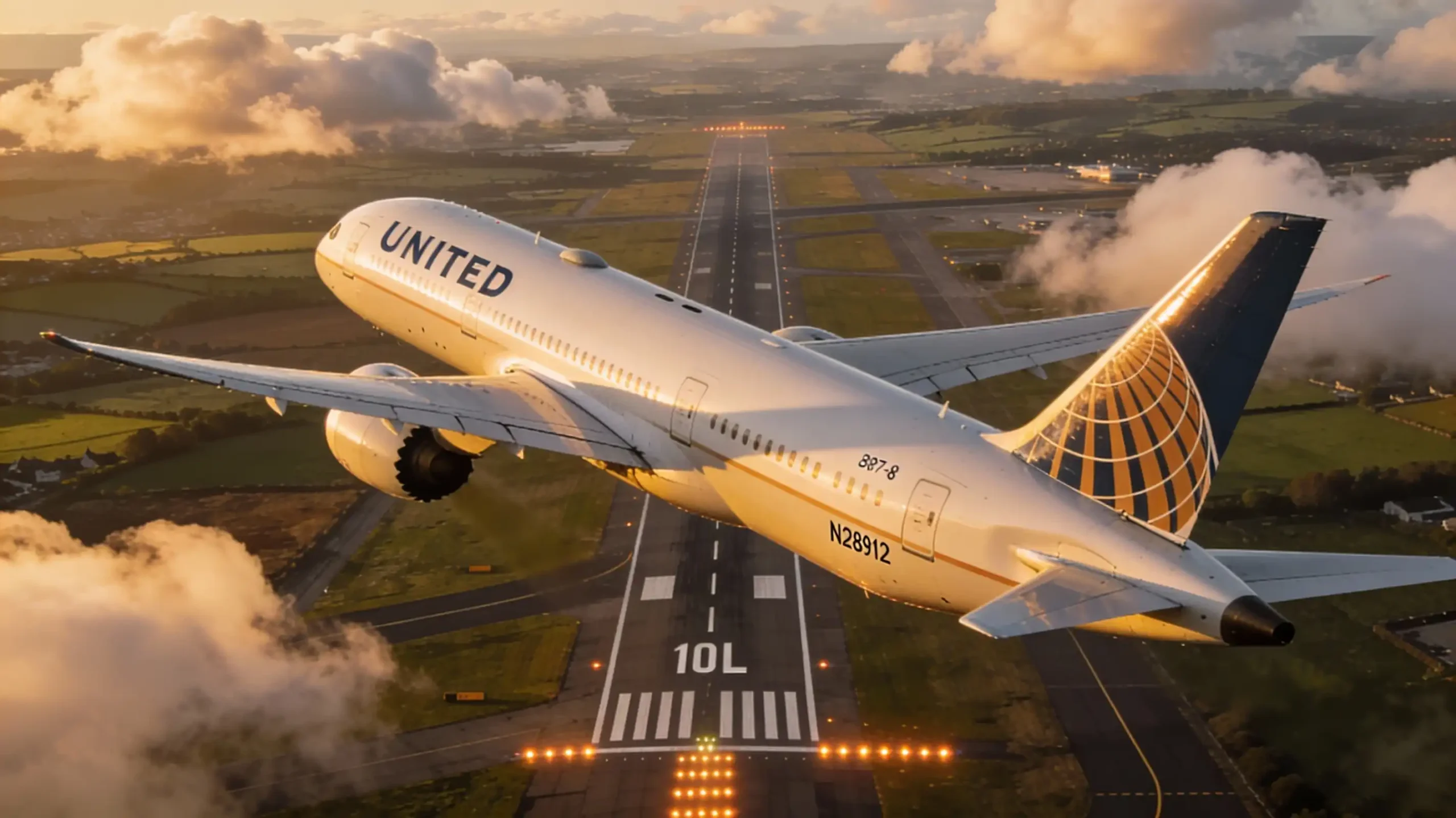
Headline news in October 2025 included United Flight UA109 diversion when the Boeing 787-8 from Munich to Washington turned back over the Atlantic due to a medical emergency and landed in Dublin. United Airlines has to manage sudden disruptions and their effects on airlines and travelers. The event helps explain how to navigate operational challenges and rebuild trust.
Incident Overview
United Airlines flight UA109 diverted on October 29 2025. The flight left Munich at 12:14 CET heading to Washington Dulles. Approximately 3 hours into the flight, at 40,000 feet over the Atlantic, there was a medical emergency involving a member of the cabin crew. The flight was met by emergency vehicles. United had already scheduled a new departure for 4:20 PM, demonstrating a fast response.
There were no significant issues affecting the flight, such as mechanical issues or adverse weather. This situation is becoming increasingly common. For example, a Delta flight to Boston also diverted to Ireland at approximately the same time. These situations test the preparedness of the airlines.
Operational Challenges
United flight ua109 diversionalso demonstrates the operational challenges associated with airline diversions. There is a significant increase in the cost of fuel when a flight diverts, particularly in the case of United. The Boeing 787-8 uses a great deal of fuel, and with the diversion of 1,500 miles, it would experience even greater fuel consumption. These diversions also create severe disruptions to crew scheduling on affected flights, as the U.S. rest requirements for airline crew create delays and necessitate crew swaps. This creates a cascading effect on the schedule of the flights. The ground crew at Dublin had to manage an unanticipated arrival, which is a significant strain on the resources at a busy hub.
Routine checkups following a diversion take time. Aircraft must be inspected before they can be scheduled to depart again, which can take hours or days. United was able to make a quick replan to avoid this, but the issues still affected connecting flights.
Financial Costs Breakdown
There is a financial impact when flights are diverted. The following section outlines the financial impact of a transatlantic diversion such as on United flight ua109 diversion.
| Cost Category | Estimated Amount (USD) | Details |
| Extra Fuel | 50,000 – 80,000 | U-turn and diversion burn. |
| Crew Overtime/Per Diem | 10,000 – 15,000 | Rest and hotel needs. |
| Passenger Compensation | 20,000 – 50,000 | EU rules for delays over 3 hours. |
| Ground Handling | 15,000 – 25,000 | Unexpected airport fees. |
| Maintenance/Inspections | 10,000 – 20,000 | Post-event checks. |
| Total per Incident | 105,000 – 190,000 | Varies by aircraft and duration. |
These numbers are based on the industry average to reroute a 787. The total amount can increase if the airline is sued or there is damage to the airline’s PR.
Effects on Passenger Trust
Most affected by the diversion are the passengers. The diversion of United flight ua109 diversionwas in the middle of the diversion, in which they were left in the middle of the Atlantic. Their fears of safety were real. There was a diversion and the concerns about safety were magnified by social media.
Delays cause a loss of confidence. The flight diversion to Dublin resulted in delays, overnight stays in a hotel, and lost connections. The EU restrictions require provisions in the form of meals, hotel accommodations, and even cash reimbursements, which can cause the airline to lose even more through poor customer service.
When confidence is lost, the only outcome is a decrease in the number of flights that are booked. Reports indicate that United must make communication a priority if they would like to consider this issue.
Strategies for Recovery
When there is a diversion, the first reaction of the airline is to implement strict procedures to minimize the impact. United’s team was able to work directly with Dublin to get service to the gates and run real time apps for passengers as a diversion.
Crews are required to train. They usually run exercises on medical emergencies, which was instrumental in the United flight ua109 diversion call. Technologies like satellite communication facilitate real time decision-making. Improved post-event assessments over the activities after United filed a complaint shows the airline may have used flight trackers from FlightAware to identify the data mitigation points. Collaborations with data hubs, such as Dublin, enhance the speed of the data mitigations.
Lessons from the United Incident
The diversion of United flight UA109 illustrates the importance of risk preparedness. To avoid route diversions, airlines need to make substantial investments in predictive measures such as weather radars and health monitoring systems, as diversions in a given year are forecast to decrease by 15% as a result of those technologies.
While insurance may cover the costs associated with an incident, the associated reputational consequences are not covered. United, for example, has used the Net Promoter Score methodology to analyze the incident in order to assess the levels of trust associated with the brand after each incident. The United incident illustrates the value of diversification. Having more options in terms of routes and fleet size creates mitigation buffers during an event. The ability of complex data analytics to assist in predicting and avoiding crew health risks prior to take-off is another example of such diversification.
Restoring and Building Passenger Trust
Emphasizing the positive aspects of loyalty programs is crucial. After disruptions, United provides members with miles and positive system status upgrades to enhance value. Goodwill is quickly generated by offering a premium system status tier refund. Restorative faith is built through real-time system updates. Passengers following their route appreciated the real-time updates following United flight ua109 diversion. The presence of a CEO at the incident is a valued addition to such circumstances.
The restoration of trust by the United incident surveys has resulted in the auxiliary use of the trust loss surveys. In the instance of United, the restoration of faith in the systems provided by the real-time updates was increased substantially.
Estimated Changes to the Industry in 2025
The UA109 incident did not impact the aviation industry by the end of 2025. With no changes to the regulation of the industry, the focus of the EASA and the FAA remain on the medical protocols. Airlines begin using AI to avoid diversions in line with IATA guidelines.
Continued upgrades of the 2025 Boeing 787s increase range and decrease diversion associated operational costs. The regulation associated with the protection of passengers within the EU continues to be strong, returning service to the passengers. Technology such as live streaming streaming cabins challenges us in the realm of trust, but privacy concerns place limits in the other direction.
Conclusion
The diversion of United flight UA109 illustrates the fine line in which the industry operates. With these measures, future flights will be safer.
For More Details Visit Focalvent
